

抗TRAIL R2/TNFRSF10B抗体 | Anti-TRAIL R2/TNFRSF10B Antibody
掲載日情報:2018/07/09 現在Webページ番号:47231

世界最大級の抗体製品数を取り扱うNovus Biologicals社のTRAIL R2/TNFRSF10Bに対する抗体(anti-TRAIL R2/TNFRSF10B | antibody TRAIL R2/TNFRSF10B)です。Novus Biologicals社の抗体は数多くの学術論文で使用実績があります。
※本製品は研究用です。研究用以外には使用できません。
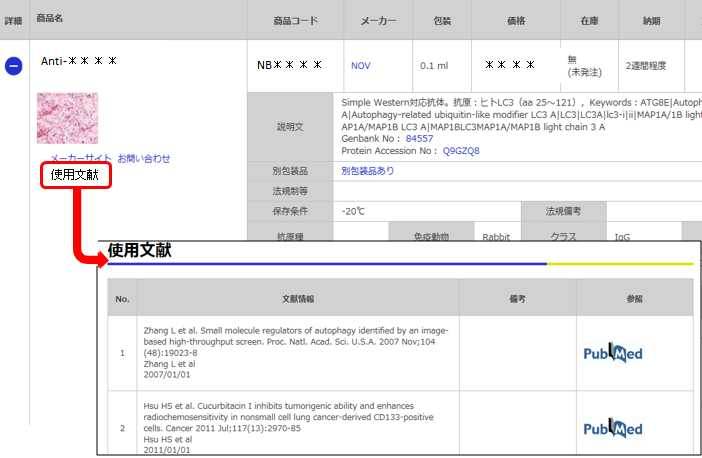
価格表左の「文献」アイコンから、使用文献情報一覧が表示できます。
カートに商品を
追加しました。
追加しました。
価格
[在庫・価格 :2026年04月06日 18時35分現在]
※ 表示されている納期は弊社に在庫が無く、取り寄せた場合の納期目安となります。
| 詳細 | 商品名 |
|
文献数 | ||||||||||||||||||||||||||||||||||||||||||||||||||||||||||||||||||||||||||||||||||
|---|---|---|---|---|---|---|---|---|---|---|---|---|---|---|---|---|---|---|---|---|---|---|---|---|---|---|---|---|---|---|---|---|---|---|---|---|---|---|---|---|---|---|---|---|---|---|---|---|---|---|---|---|---|---|---|---|---|---|---|---|---|---|---|---|---|---|---|---|---|---|---|---|---|---|---|---|---|---|---|---|---|---|---|---|---|
|
Anti-TRAIL-R2, Rabbit-Poly |
|
41 | |||||||||||||||||||||||||||||||||||||||||||||||||||||||||||||||||||||||||||||||||||
|
|||||||||||||||||||||||||||||||||||||||||||||||||||||||||||||||||||||||||||||||||||||


[在庫・価格 :2026年04月06日 18時35分現在]
※ 表示されている納期は弊社に在庫が無く、取り寄せた場合の納期目安となります。
Anti-TRAIL-R2, Rabbit-Poly
文献数: 41
- 商品コード:NB100-56618
- メーカー:NOV
- 包装:0.1mg
- 価格:¥96,000
- 在庫:無(未発注)
- 納期:3~4週間 ※※ 表示されている納期は弊社に在庫がなく、取り寄せた場合の目安納期となります。
- 法規制等:
| 説明文 | レビューあり。旧IMGENEX社 商品コード:IMG-120A,Keywords:CD262|CD262 antigen|death domain containing receptor for TRAIL/Apo-2L|Death receptor 5|DR5TRICK2B|Fas-like protein|KILLER/DR5|KILLERapoptosis inducing protein TRICK2A/2B|TNF-related apoptosis-inducing ligand receptor 2|TRAIL receptor 2 Genbank No: 8795 |
||||||
|---|---|---|---|---|---|---|---|
| 別包装品 | 別包装品あり | ||||||
| 法規制等 | |||||||
| 保存条件 | -20℃ | 法規備考 | |||||
| 抗原種 | 免疫動物 | Rabbit | |||||
| 交差性 | Human/Mouse | 適用 | FCM,IC,IF,IHC,Western Blot | ||||
| 標識 | Unlabeled | 性状 | Protein A/G Affinity Purified | ||||
| 吸収処理 | クラス | IgG | |||||
| クロナリティ | Polyclonal | フォーマット | |||||
| 掲載カタログ |
|
||||||
| 製品記事 | |||||||
| 関連記事 | |||||||
カートに商品を
追加しました。
追加しました。
Image
 | Western Blot: TRAIL R2/TNFRSF10B Antibody [NB100-56618] - Total protein from HL-60, HepG2, HCT-116 and human placenta was separated on a 12% gel by SDS-PAGE, transferred to PVDF membrane and blocked in 5% non-fat milk in TBST. The membrane was probed with 2.0 ug/ml anti-TRAIL R2 in 1% non-fat milk in TBST and detected with an anti-rabbit HRP secondary antibody using chemiluminescence. |
 | Western Blot: TRAIL R2/TNFRSF10B Antibody [NB100-56618] - Analysis of 20 ug of whole cell lysates from HL60 cells with anti-TRAIL R2/TNFRSF10B at 5 ug/ml. Image using the Azide Free form of this antibody. |
 | Immunocytochemistry/Immunofluorescence: TRAIL R2/TNFRSF10B Antibody [NB100-56618] - HepG2 cells were fixed for 10 minutes using 10% formalin and then permeabilized for 5 minutes using 1X TBS + 0.5% Triton-X100. The cells were incubated with anti-TRAIL R2 (H76) at 5ug/ml overnight at 4C and detected with an anti-rabbit Dylight 488 (Green) at a 1:500 dilution. Alpha tubulin (DM1A) NB100-690 was used as a co-stain at a 1:1000 dilution and detected with an anti-mouse Dylight 550 (Red) at a 1:500 dilution. Nuclei were counterstained with DAPI (Blue). Cells were imaged using a 40X objective. |
 | Immunohistochemistry-Paraffin: TRAIL R2/TNFRSF10B Antibody [NB100-56618] - IHC analysis of a formalin fixed paraffin-embedded (FFPE) human brain cerebellum using 1:200 conc. of TRAIL R2/TNFRSF10B antibody on a Bond Rx autostainer (Leica Biosystems). The assay involved 30 minutes of heat induced antigen retrieval (HIER) using 10mM sodium citrate buffer (pH 9.0) and endogenous peroxidase quenching with peroxide block. The sections were incubated with primary antibody for 15 minutes and Bond Polymer Refine Detection (Leica Biosystems) with DAB was used for signal development followed by counterstaining with hematoxylin. Cytoplasmic staining was observed in the Purkinje cell layer. |
 | Western Blot: TRAIL R2/TNFRSF10B Antibody [NB100-56618] - Analysis using the Azide Free version of NB100-56618. Detection of 20 ug of whole cell lysates from HL60 cells with anti-TRAIL-R2 at 5 ug/ml. |
カートに商品を
追加しました。
追加しました。
Background
Apoptosis is induced by certain cytokines including TNF and Fas ligand in the TNF family through their death domain containing receptors. TRAIL/Apo2L is a new member of the TNF family. DR4 was recently identified as the receptor for TRAIL. A novel death domain containing receptor for TRAIL was more recently identified and designated DR5, Apo2, TRAIL-R2, TRICK2, or KILLER by several groups independently (1-2). Like DR4, DR5 transcript is widely expressed in normal tissues and in many types of tumor cells. DR5 binds to TRAIL and mediates TRAIL induced cell death. Overexpression of DR5 induces apoptosis and activates NF-kB.カートに商品を
追加しました。
追加しました。
製品情報は掲載時点のものですが、価格表内の価格については随時最新のものに更新されます。お問い合わせいただくタイミングにより製品情報・価格などは変更されている場合があります。
表示価格に、消費税等は含まれていません。一部価格が予告なく変更される場合がありますので、あらかじめご了承下さい。